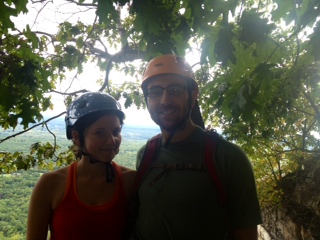
if you have an interest in dogs, climbing, veterinary things, geocaching, hissing cockroaches, ugly bikes, burning man, the smiths, or organic chemistry.... this might interest you
Sunday, October 6, 2013
Thursday, October 3, 2013
...more microbiology
Let's pick up...sort of where we left off. Oh yikes, you can see my reflection.
Anyway...here's some cell shapes.
...and here are the groupings/arrangements of cocci and bacilli cells.
Take note on the Neisseria gonorrhoeae which is a diplococcus!
Here we have the UGLIEST bacterial cell ever drawn. I've labeled stuff, too. You've got the capsule on the outsides. Need to talk a bit about capsules at some point...
Then comes the cell wall, followed by the cytoplasmic membrane and the cytoplasm on the inside.
{I'll talk a very tiny bit about glycocalyx (capsules and slime layers) before we go onto lipid bilayers. Glycocalyx is the protective outer layer. Not all bacteria have it. It can either be a capsule or a slime layer. Capsules are thick while slime layers are thin and diffuse. The glycocalyx also helps bacteria stick to surfaces of things.}
Luckily since I took orgo, I'm quite familiar with lipid bilayers. Hydrophobic insides and hydrophilic (water-loving) on the outside and within. These make up cytoplasmic membranes in cells.
Here's a more (only sadly slightly more..) 3-D version of the plasma membrane. It has proteins in it that typically enable the passing of material that can't pass through the membrane itself.If you somehow destroy a bacterium's plasma membrane, you effectively kill the bacterium. Shit's important. Bacteria and archaea have the same structural features in the plasma membrane but the lipids differ (duh).
![]() |
Things that can and can't pass through the lipid bilayer.
A horrible rendition of transport proteins. They change shape apparently, when letting things pass through them.
I want to switch gears for a sec and talk about Cell Walls and the peptidoglycan that makes them up. I talked in the last post about N-acetylmuramic acid and N-acetylglucosamine and how they're the structural components of peptidoglycan...Here's how the structure is laid out. Ugh the photo is AWEFUL but bear (bare?) with me here. There's chains of ...NAM-NAG-NAM-NAG... and they're attached by layers of tetrapeptide (four peptides..) chains in between. In G+ cells, there's peptide interbridges that are not present in G- cells. There's an enzyme in our saliva and tears called Lysozyme, which has the capacity to break the bond in peptidoglycan between the NAM and NAG units..This messes with the structural integrity of the cell wall. Antibiotics like penicillin have acting mechanisms similar to this.
Here's a visual and slightly better idea of G- cells than what I had in the last post...Ehh...sort of. The lipopolysaccharide is on the outside, part of the outer membrane. The outer membrane is a protective lipid bilayer. It has porin proteins that let small molecules into the periplasmic space...then comes the periplasmic space where the thin layer of peptidoglycan is, and finally the plasma membrane (phospholipid bilayer) with integral proteins. When people first get to the end of orgo 2/beginning of biochem they're like: "ugh phospholipid bilayers like THAT matters"....well it does. Just sayin'. In G - cells, the plasma membrane regulates what goes in/out of the cell. It has transporters (those proteins) to regulate movement of shit that doesn't pass through the bilayer on its own.
It might also be a good idea to talk about the growth curve in laboratory conditions. This is produced by batch cultures, which are closed systems - meaning you don't renew nutrients or remove waste from the plates/flasks. In open systems, you would need to add nutrients and remove waste to ensure continuous growth.
But this curve is for closed systems. Initially we have the lag phase, in which the cells are figuring out their environment, turning on whatever genes are needed, and feeling out their surroundings. Next is the log or exponential growth phase. Cells grow rapidly and there's almost no variability in their activities. Following that is the stationary phase. Cell death and cell replication are in equilibrium; there is variation/heterogeneous activity. The death phase soon follow as cells run out of nutrients, followed by the phase of prolonged decline.
Cells are most sensitive to antibiotics in the log phase when they're actively replicating. Endospores are formed in the stationary phase, when cells are kind of realizing that they are running low on nutrients. If you're testing enzyme activity, you want to do it in the log phase since there's little to no variation in what the cells are doing. To calculate growth rate, you have:
N(t) = No x 2^n
# cells at time (t) = initial number of cells x 2^number of cell divisions
Some things to leave myself off with before I try to fall asleep..
Prokaryotes naturally have no nuclear membrane.
Only bacteria have peptidoglycan in their cell walls.
Protozoa is the only group in Eukaryotes that have only single-celled members...they're also bigger than Prokaryotic cells by about 50-100 times.
Antibiotics are intended to target the cell walls of gram positive cells, fucking with the peptidoglycan in there. Some shit may not be effective for gram negative cells since
a) the peptidoglycan is UNDERNEATH the outer membrane and
b) the peptidoglycan is a significantly thinner layer
Gram positive cells have techoic acids and lipotechoic acids intermingling with the peptidoglycan layer.
Gram negative cells have an outer membrane, whose outside layer is lipopolysaccharide and their cell wall is in between the outer membrane and cytoplasmic membrane. The LPS is important when considering pathogens since our immune systems see the LPS of bacterial cells first. Some pathogens can fuck with our immune system and modify the LPS.
Only gram positive bacteria is sensitive to penicillin and lysozyme.
Bacillus and Clostridium are infamous for forming endospores. Fuck that shit.
Mycoplasma refers to a genus of bacteria that lacks a cell wall.
Mycobacteria are acid-fast Gram positive bacteria that have a very thick, protective, waxy cell wall.
^That is thanks to : http://ntmnews.blogspot.com/2012/08/mycobacteria-and-mycoplasma-what-is.html
Lets learn some shit.
My first microbiology exam is TOMORROW and thus, I've decided to do a small thing.
The shit we're learning about in microbio is divided into two main categories...living shit and non-living (infectious agent) shit.
Living shit falls into two subcategories: Prokarya and Eucarya
Non-Living shit's categories are: Viruses, Viroids, and Prions (the really fucking scary ones)
Eucarya gets people like: Algae, Protozoa, Fungi (yeasts and molds), and Helminths (rounds and shit like that)
Some relative sizes of shit. Viruses are obviously the smallest, maxing out at 100nm (usually less). Bacteria & Archaea are relatively the same size, different things have told me different sizes, but on average of 1-5 or 1-10 micrometers (10^-6). Eukaryotes are bigger at 10-100micrometer cell sizes.
As far as Eukaryotes go, they mostly come single and multicelled with exception of protozoa which are always going to be single-celled organisms.
These terrifying motherfuckers.
Viruses have DNA, RNA and a protein coat while viroids (mostly infect plants) and have only RNA, no protein coat.
Prions are misfolded proteins and can cause neurodegenerative disease, mostly from eating prion-infected tissue. They're resistant to any possible form of killing, so they're scary as shit.
Some words on bacteria. Since they're prokaryotes (something dealing with pre-real nuclear membrane structure), they have no membrane bound nucleus or organelles. Their cell walls are made out of peptidoglycan (to be discussed later).
This whole hypo-hyper tonic shit really confused me (and really still kind of does)
Bacteria live in hypotonic environments meaning their insides are hypertonic. Google defines this as "having increased pressure or tone", measuring osmotic pressure. So, they like not having pressure on their outsides, but their insides are pressurized? Things outside of them that can't come in cause pressure. Hypertonic environments will have a lot of crap in them (that's outside the cell), which makes water want to flow out of the cell to try to create equilibrium, which is unfortunate for the cell. The cell membrane ends up getting pulled away from the cell wall, resulting in plasmolysis.
Just a few words about Archaea. What's crazy is that they're actually evolutionarily closer to us than they are to bacteria. Which I think is nuts. Most of them are extremeophiles, living in the arctic and deep sea vents. Their cells walls don't have the peptidoglycan crap that I'm going to talk about later.
Some staining methods we've done in the lab. Gram stains tell the difference between Gram positive cells and gram negative cells. This deals with how much peptidoglycan is in the cell walls, whether or not that cell wall will retain the dye. Crystal violet and iodine form a complex in the cell that when you decolorize with alcohol, doesn't wash out of gram positive cells. (These will be purple when you look at them under a microscope). Gram negative cells have a thin layer of peptidogylcan in their cell walls, and the decolorizer damages their outer membranes (not present in Gram+ cells). After you decolorize the G- cells, you counter-stain with safranin, making your G- cells look red/pink.
The other stain we did in lab was the Acid Fast Stain which applies to microorganisms that don't take up dyes like G-/G+. A type of these are Mycobacteria...scary shit that causes TB and leprosy. The cell wall in these things have lots of waxy mycolic acids (which is why they don't take up dyes)
A HORRIBLE rendering of a G+ cell wall. The cell wall is on the outside, with techoic acids in it. They give the bacteria a negative exterior charge, sticking out above the peptidoglycan later (which, remember, is super thick in G+ cells). There's also lipotechoic acids somewhere in the cytoplasmic membrane (made of a lipid bilayer...my favorite thing).
If my "art" couldn't get any worse...it just did. Here's a G- cell wall structure. The cell wall has only a thin peptidoglycan layer but has a sick outer membrane (which is not present in G+ cells). The outer membrane has lipids and porin proteins inside of it and lipopolysaccharide (an endotoxin) on the outside of it. The LPS is what our immune system sees, and recognizes foreign crap.
The LPS is made out of Lipid A and O Antigen. O Antigen is directed outside of the membrane, with Lipid A anchoring the LPS into the lipid bilayer... Lipid A is toxic.
The outer membrane is why G- cells are less sensitive to antimicrobial things than G+ cells.
I said I would talk about Peptidoglycan and now I will.
It's basically repeating units of N-acetylmuramic acids (NAM) and N-acetylglucosamine (NAG). Only bacterial cells have peptidoglycan in their cell walls. PEPGLY determines the strength of the cell wall...In G+ bacteria, there are peptide interbridges.
Here's some interesting (and frightening) bacteria we have discussed thus far...
Yersinia pestis: I still remember this from a class called Marvelous Microbes I took at Rutgers. This shit is the black plague (from the 1300s).
Vibrio chloera: The cholera outbreak that happened in the 1850's in London, resulting from a contaminated water pump. Vibrio refers to a "curved bacillus" shape - basically a curvy rod bacterium. It's salt tolerant, which is scary as fuck, but luckily, not all Vibrio are human pathogens.
Treponema pallidum: This shit is a pathogenic spirochete, basically an elongated curvy twisting rod like thing. Longer and twistier than a spirillum. This shit causes syphilis and can't be cultivated in the lab.
Neisseria gonorrhoeae: A G- diplococcus (another bacterial shape), which has the power to modify its lipopolysaccharide...this is really scary because that means it can keep "changing it's jacket" to confuse our immune systems.
Staphylococcus aureus and Staphylococcus epidermis: Two very different things. S. aureaus causes a whole HOST of terrifying shit from endocarditis to your SKIN FALLING OFF, depending on the site of infection and the strain it is. It affects about 25-30% of people...It's G+ cocci growing in grapelike clusters. Terrifyingly delicious. S. epidermis, on the other hand is part of your skin's normal microflora. Obviously, also a G+ coccus structure.
Streptococcus pyogenes: G+ bacteria causing anything from strep throat to, again, your skin falling off (impetigo?), and toxic shock syndrome...also necrotizing fasciitis. Do. Not. Want.
Bacillus and Clostridium: are two types of bacteria that make endospores, which can survive in high heat, high pressure, unfavorable conditions by slowing down or discontinuing their metabolic processes. B. anthracis is a G+ bacterium causing ANTHRAX while C. tetani's spores like to live in rust...giving me tetanus when I climb fences.
Deinococcus radiodurans: is a really tough bacteria that doesn't form endospores but relies on a really good DNA repair mechanism.
I have to go get ready for class now, so we'll continue this later tonight, after lab...
Wednesday, September 25, 2013
No news is good news.
Let's hear it, guys. "Marina, you're gross. I hate you"
This isn't real news to anyone other than me... but my first hissing cockroach (Sully Cilantro) had yet another molt. I'm still on the fence as to whether it's a male or female, though.
Also, all of my evaluators have submitted their evaluations to VMCAS so other than the supplemental application that Wisconsin sends out in November, I can now stop thinking about veterinary school applications and start thinking about biochem, microbio, and veterinary school interviews.
I have been having persistent bursts of suffocating anxiety, but have been controlling it fairly well. I've been practicing dealing with the overwhelmingness of WORLD by convincing myself that every time I walk through a doorway, I'll die. Suffice it to say, not dying has helped.
Thursday, September 19, 2013
Opposite hour in heartbeat land
As of 12:36 AM, I am 99% done with my veterinary school applications UNTIL November when Wisconsin will send me their supplemental application.
I submitted my North Carolina application, all the essays, and the payment just a minute ago :)
I struggled with my final essay topic that discussed an interpersonal interaction that significantly impacted me, and finally chose to write about a wonderful friend I met on the lovely Governor's Island, and how our meeting impacted my life.
Now, the waiting game begins...
I submitted my North Carolina application, all the essays, and the payment just a minute ago :)
I struggled with my final essay topic that discussed an interpersonal interaction that significantly impacted me, and finally chose to write about a wonderful friend I met on the lovely Governor's Island, and how our meeting impacted my life.
Now, the waiting game begins...
I'm a bad person.
Having taken Gen Chem in 2008 (which in my world is like a BILLION years ago), I'm kind of having internal panic attacks about Biochemistry. I forgot all about the Henderson Hasselbalch equation and how to do titrations and all that shit so I've spent the last week and a half relearning that. In case anyone else is in my boat, here's how to bring back old memories.
Water dissociates into H+ and OH- ions.
At 25' C, the concentration [H+] ions (what we worry about) is 10^-7 M
Apparently, pH is the negative log of the [H+] and using log rules, you can calculate the pH.
Here's some more crap.
Talking about Equilibrium Constants this time (ratio of concentrations of crap in solution when the equilibrium gets to tell you that the rate of the reaction going in one direction = rate of reaction going in reverse direction)
Kw (equilibrium constant) calculated by [Products]/[Reactants], with H20 being 1, is 10^-14
Then we use some logs again to get the pkw, log calculation to the side for anyone who isn't log-savvy, and we end up with a pkw = 14
Some more very basic crap. Getting the pH of a 1M solution of a strong acid.
Overly complicated way to solve a very quick issue...getting the pH of a 1.5M solution of HF, given the Ka value.
Do the Ka = Products/Reactants, the icebox to the lower left afterwards.
You start out with 1.5M HF, and 0 of H+, F-
You use up "x" of the HF, meaning you gain "x" of H+ and F-
Final concentrations are 1.5-x of HF and x of H+ and x of F-
Plug that all into the Ka = Products/Reactants formula, neglect x for the denominator, and do some really simple algebraic crap. pH you get is about 1.49.
Whole purpose of that is to just show relationship between pka and pkb
It's unfortunate that this is so blurry since I definitely remember in gen chem that my life felt like it depended on knowing how to go from the Ka to the pH using the Products/Reactants crap.
This is REALLY important.
Once I get back on my feet, there will be a LOT more where this came from.
Monday, September 16, 2013
The Joy of Being (Almost!) Done with Vet School Apps
My summer consisted mostly of working, not climbing enough, Precalculus, and veterinary school apps.
Rappelling was definitely the hardest part of the entire day. We had to do two rappels from three pines, and the first one was shell-shockingly traumatizing. Mostly because it was my first time rappelling, I still couldn't get the proper hand motions, walking BACKWARDS off a cliff is immensely terrifying, and losing footing after rappelling down from overhangs causes you to swing around in circles, forcing you to look out into the world instead of directly at the face of the mountain. The second rappel down was far easier, and went a lot faster.
I rocked the shit out of precalc with my A+, and it's almost entirely due to the fact that the professor was extremely good at making the material understandable. It's great to see the difference a good professor really makes for people.
For my VMCAS App, it took at least two months to get my personal statement written. I had so many doctors from work look over it (multiple times) until I got it right. Still waiting on two evaluators to submit their letters for VMCAS.
The most annoying part was having to calculate my GPA in a million different ways. Last 30 credits? Last 45 credits? Last 70 credits? Science credits? Extra credits? Hah. I also need to, of course, submit transcript for Fall 2013 when I come to that part o' my life.
As far as the individual supplemental applications go...
Auburn: I had the greatest difficulty with this one, even though it was technically the shortest one. Their essay involved something like a cost/benefit analysis of the rising costs of a veterinary education, which was actually very interesting for me to read up on. I looked up the starting salaries for shelter, food animal, and research veterinarians across the US. It's crazy how much higher the starting salaries are on the west coast. It was also pretty disheartening to find that the debt you're left with after graduating veterinary school is 200% of your starting intern salary. Disheartening, but certainly not discouraging. Also, Auburn wanted a passport sized photo...and there ARE no photos of me, so I had to improvise last second with this gem:
How. AWFUL. I look like I'm a million years old.
Minnesota: Had no supplemental application. Take my money!
Missouri: Surprisingly enough, no essays. Just some fill ins.
Ohio: I feel like this was a bouncy application. I had to fill out different things in different places. Very roundabout way of getting things done.
Washington State U: This was the neatest application setup of all. I genuinely enjoyed filling it out. Very aesthetically appealing.
Virginia-Maryland Regency: Not entirely sure why it took me so long to get this one done. It wasn't that involved.
UPenn: Very short application, over in one single hit. And that's why it took me as long as it did to submit it, I guess. John Falco, an old friend (and co-eboard member from Rutgers) is at this school.
Cornell: Lots of essays that were mentally stimulating, only submitted this one about a week ago.
Tufts: :) Just submitted this application today. Finally completed all my essays and was able to get all my evaluator letters in. Had to send in my transcripts very last minute because I kept forgetting that Tufts and VMCAS aren't actually in communication with each other. Everything you do for VMCAS means nothing for Tufts. Everything's done individually.
Wisconsin: Waiting to be contacted in November regarding their supplemental application. That's also when you pay the fee.
North Carolina: Still working on this one. One more essay to go! NC's essays are also pretty involved.
Saturday, Alex, Nicki, and I went climbing at the gunks. Here's some photos Alex took of me.
![]() |
| Up the first pitch I go. |
![]() |
| My ass on the first pitch :) |
![]() |
| I have a really hard time with these open face things. Apparently, hanging suspended over nothingness makes me severely uncomfortable. |
![]() |
| This is Nicki, our fearless leader, leading the Horseman run. |
![]() |
| Starting the last bit of that traverse. Honestly, getting over that probably took longer than getting TO it. |
![]() |
| Having gotten good hand-grips and mediocre footing, finally making it over to Nicki. |
Definitely cannot wait to go climbing again. Alex bought me my first harness, so now we can do more top-roping if we feel like it. Definitely cannot wait to go climbing again :)
I'll leave you with this picture:
![]() |
| Smelly dog on my bed. |
Subscribe to:
Posts (Atom)

.jpeg)
.jpeg)
.jpeg)
.jpeg)
.jpeg)
.jpeg)